
Crawl Space Encapsulation in Atlanta, GA
Encapsulation seals the crawl space off from the ground and the outside air, then controls what is left. Georgia's code sets the floor. Everything above that floor lives in your written scope.
Who handles crawl space encapsulation in Atlanta, GA?
Atlanta Crawl Space Solutions arranges crawl space encapsulation across Atlanta and the metro counties. Encapsulation means a sealed Class I liner over the ground and up the walls, vents closed, and humidity actively managed by one of four accepted methods. It treats vapor and humid air — liquid water and damaged framing are dealt with before any liner goes down. Call (404) 974-4979 to arrange an evaluation.
What is crawl space encapsulation?
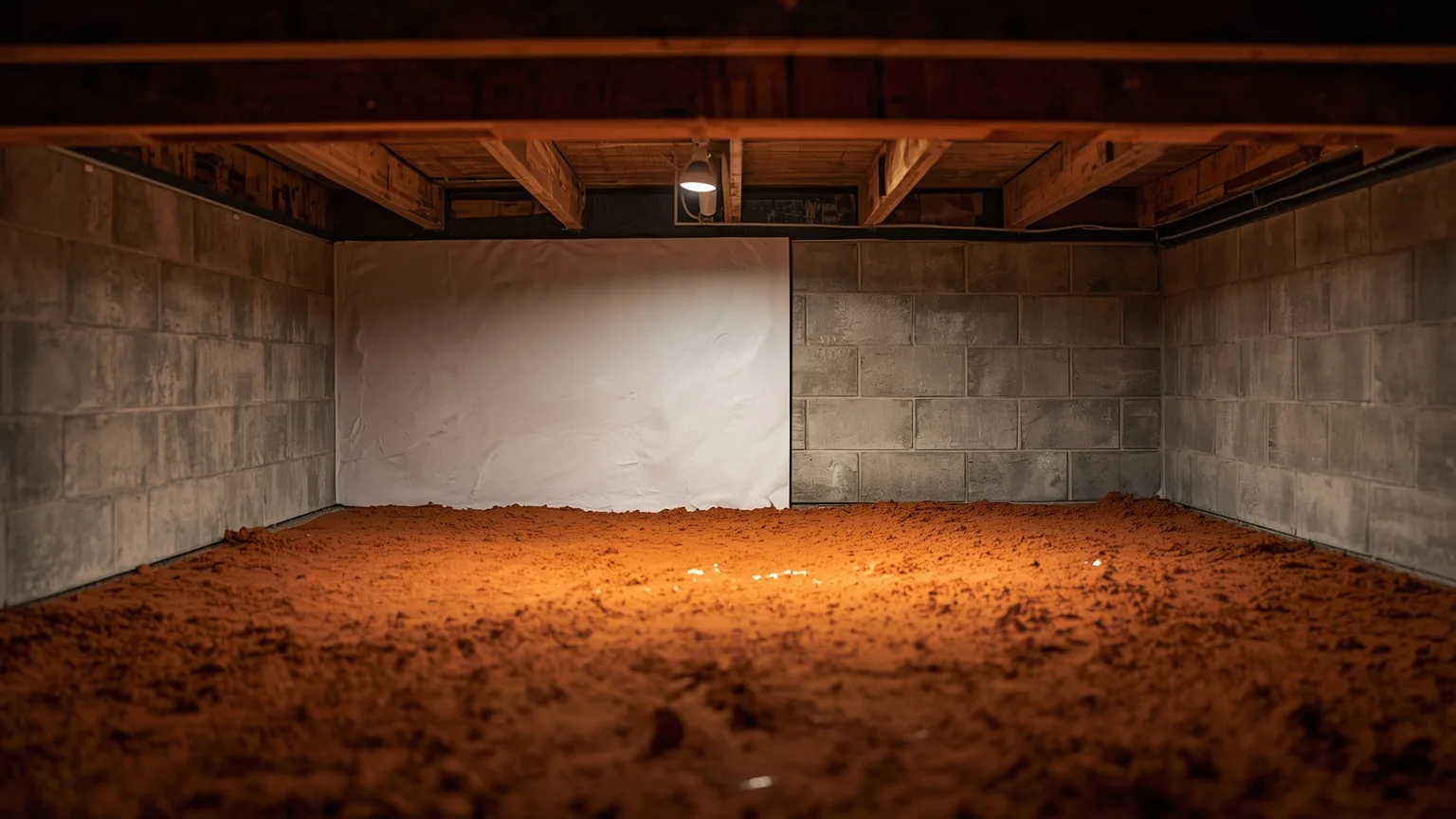
Encapsulation is a sealed system, not a product. The ground is covered by a continuous liner, that liner is carried up and attached to the foundation walls, the ventilation openings are closed, and the humidity in the resulting sealed space is deliberately controlled. All four parts are required for it to work.
Georgia's residential code recognizes this as a legitimate way to build a crawl space. Section R408.3 permits an under-floor space to have no ventilation openings, but only where a continuous Class I vapor retarder covers the exposed earth — joints overlapped 6 inches and sealed or taped, edges carried at least 6 inches up the stem wall — and one of four conditioning methods is provided.
Closing the vents is therefore not the job. Closing the vents is what you are permitted to do because the job was done.
Signs encapsulation may be the right service
None of these prove you need it. They are the conditions under which it is usually the right tool rather than the wrong one.
- Bare soil underfoot. Open ground releases moisture continuously, and ventilation does not keep up with it through an Atlanta summer.
- Humidity that stays high from May through September. A space that reads high all summer and settles in winter is describing a vapor and air problem, not a leak.
- Condensation on ducts and water lines. Beading on cold surfaces is outdoor air giving up moisture — exactly what sealing and conditioning address.
- Insulation sagging or on the ground. Batts that absorbed moisture and let go are reporting sustained humidity. See <a href="/crawl-space-insulation/">crawl space insulation</a>.
- A musty smell in the rooms above. Air moves upward through a house, so what the crawl space smells like reaches the ground floor.
Does encapsulation stop standing water?
No. This is the single most important thing to understand before signing anything.
Encapsulation addresses ground vapor and humid air. Liquid water arriving from outside runs over or under the liner and stays there, and sealing removes the evaporation that was partly clearing it. A liner installed over an active water source hides the problem and makes it worse.
Water is resolved first — usually through grading and roof discharge, sometimes through drainage and a sump. Our waterproofing page covers how the two services differ and which order they belong in.
What should be fixed before encapsulation?
Three things, in this order, and all three are cheaper to reach before a liner is in the way.
Active water. Any source of liquid water entering the space, including plumbing leaks, which are worth eliminating early because they are a different trade entirely.
Damaged framing. Joists, girders and supports that moisture has already reached. In Georgia this also has a licensing dimension — see crawl space repair.
Failed material. Old fallen insulation and a torn barrier have to come out and be disposed of, and that is a real line item rather than a rounding error.
And not every crawl space needs this at all. A dry space with sound ground cover and framing in a normal moisture range does not need a five-figure intervention to make it better.
What a real encapsulation scope contains
A quote that reads as one line and one number is not a scope. Ask for the liner product and its vapor retarder class, how seams are treated, how far up the wall it goes and how it is fastened, the detail at piers and penetrations, whether the ventilation openings are being closed, which of the four conditioning methods is included and at what capacity, what removal and disposal is covered, and what is excluded.
Two contractors can use the same word and describe genuinely different work at a similar price. The itemized version is the only way to compare them, and the contractor page covers the questions that make bids comparable.
Georgia leaves the crawl space code alone — and that shifts the burden to your contract
Georgia adopted the 2024 International Residential Code with Georgia Amendments effective January 1, 2026. The interesting part is what those amendments do not touch: the current Georgia amendment packet published by the Department of Community Affairs contains no changes to Section R408 whatsoever.
That makes Georgia unusual. Several states rewrite this section — some specify a minimum dehumidifier capacity in pints per day, some specify a liner performance standard the material has to meet. Georgia does neither. The model code text applies here exactly as published, and item 2.4 of R408.3 asks only that dehumidification be "sized in accordance with manufacturer's specifications".
The practical consequence for an Atlanta homeowner is that the code gives you less to check a quote against than it would in some other states. There is no state-specified capacity number to hold a contractor to. That does not make the work worse here — it means the written scope, not the code, is what protects you, which is why every page on this site pushes toward getting the specification in writing.
Crawl Space Encapsulation questions
Does crawl space encapsulation stop standing water?
No. Encapsulation addresses ground vapor and humid air. Liquid water runs over or under the liner and remains, and sealing removes the evaporation that was partly clearing it. Water has to be resolved first through grading, roof discharge or drainage, and only then is sealing worth doing.
What does Georgia's code require for a sealed crawl space?
Section R408.3 requires a continuous Class I vapor retarder over the exposed earth, with joints lapped 6 inches and sealed and edges carried at least 6 inches up the stem wall, plus one of four conditioning methods: mechanical exhaust, a conditioned air supply, a plenum arrangement, or dehumidification. Georgia adopts this section without state amendment.
What should be fixed before encapsulation?
Active water entry, plumbing leaks, and any framing or support that moisture has already damaged. All three are far cheaper to reach before a liner is installed, and structural work in Georgia carries its own licensing requirement.
Do the foundation vents have to be closed?
If you are building the space as an unvented crawl space under R408.3, yes. Closing vents without a compliant liner and a conditioning method leaves the space neither properly vented nor properly sealed, and it can perform worse than it did before.
Is encapsulation worth it in Atlanta?
It is worth it where the problem is ground vapor and humid air, which describes a large share of metro Atlanta crawl spaces given a long humid season. Where water is arriving off a slope or a roof, that gets fixed first — otherwise encapsulation seals the water in.
Related crawl space services
Crawl Space Encapsulation Contractor
What to verify before you hire, and the questions that separate bids.
Crawl Space Encapsulation Cost
The variables behind the spread — and why one number cannot be honest.
Vapor Barrier Installation
Ground cover that stops soil moisture — and what it does to code.
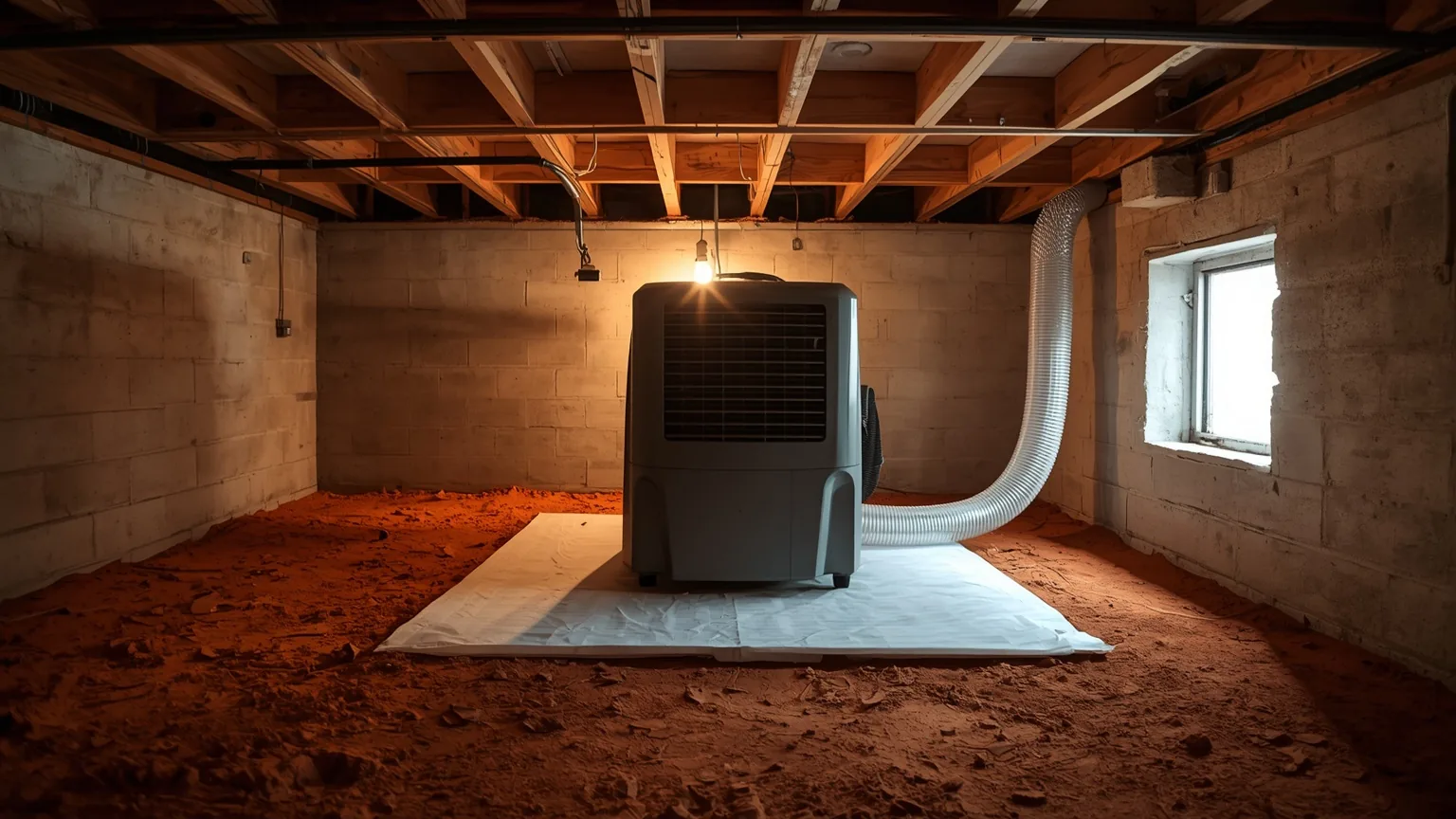
Crawl Space Dehumidifiers
When a unit is warranted, and how to pin down the sizing.
Find out what is actually causing it.
An inspection underneath, readings taken on site, and a written scope ahead of any figure.