
Crawl Space Dehumidifier Installation in Atlanta, GA
A dehumidifier is one of four ways the code lets you condition a sealed crawl space. Georgia does not say how big it has to be, which puts the sizing question squarely on your contract.
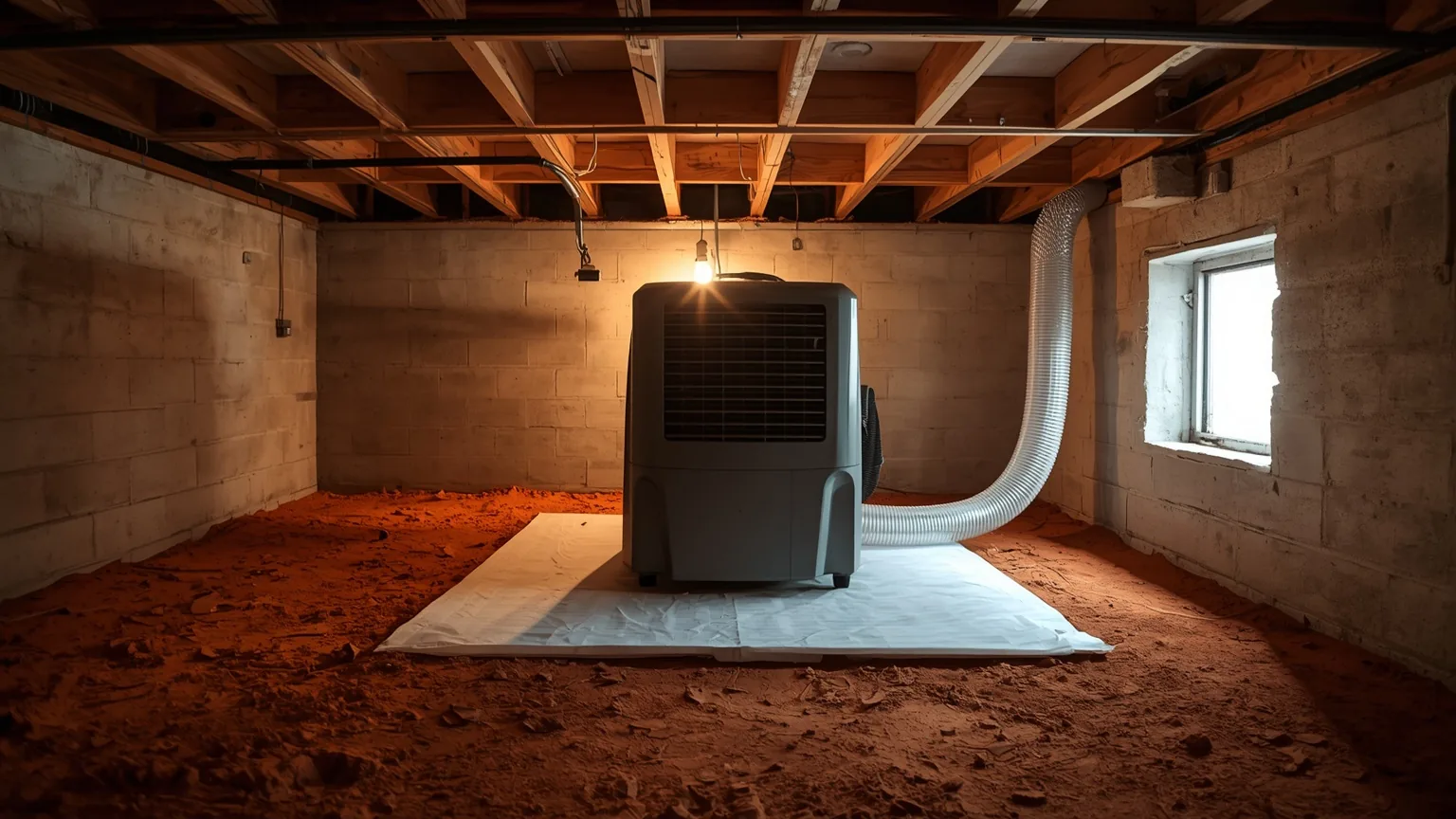
Who handles crawl space dehumidifiers in Atlanta, GA?
Atlanta Crawl Space Solutions arranges crawl space dehumidifier installation across metro Atlanta. A dedicated unit is warranted where a space has been sealed and needs its humidity actively managed. In a vented crawl space it is close to pointless. Georgia sets no capacity figure in the code, so the sizing should be justified in writing rather than assumed. Call (404) 974-4979 to arrange an evaluation.
When does a crawl space need a dehumidifier?
When the space has been sealed, has no active water entry, and still needs its humidity held down. That is the narrow set of conditions under which a dehumidifier earns its cost.
In a vented crawl space it is close to pointless — the unit is dehumidifying the outdoors through the foundation openings, running constantly and achieving very little. In a space taking on runoff it treats a symptom while the source continues.
So it belongs in the conversation after sealing and after any water work, not instead of them.
The four conditioning methods, and where dehumidification sits
Sealing a crawl space is only half of what R408.3 requires. The section also requires one of four conditioning methods, and dehumidification is one of them.
- Continuously operated mechanical exhaust at 1 cubic foot per minute for each 50 square feet of crawl space floor area, with an air pathway to the common area and perimeter walls insulated.
- A conditioned air supply sized to deliver 1 cubic foot per minute for each 50 square feet of under-floor area, with a return air pathway and insulated perimeter walls.
- A plenum in an existing structure where the under-floor space is used as a plenum and complies with the mechanical provisions.
- Dehumidification sized in accordance with the manufacturer's specifications — which, as the note below explains, is all the code says in Georgia.
Condensate has to go somewhere permanently
A crawl space dehumidifier pulls water out of the air continuously through a long humid season, and that water needs a designed route out: a gravity drain to a suitable point, or a condensate pump where gravity will not do it. A unit draining into a reservoir somebody is expected to empty is not a crawl space solution, because nobody goes down there.
Condensate lines are a routine failure point. They block, they get knocked loose, and the first sign is often water on the liner. The arrangement should be inspectable without dismantling anything, and where it discharges outside on a sloping lot, it should not be discharging back toward the foundation.
Living with one
These units run for years in an environment nobody visits. Filters need cleaning, coils collect dust, and the drain needs checking. A humidistat that has drifted or a unit that has quietly stopped can go unnoticed for an entire summer, by which point the space has run at seasonal humidity throughout.
The practical answer is a humidity readout visible without crawling underneath, and a reminder to actually look at it before the humid season starts.
Georgia sets no capacity figure — so ask for one in writing
This is the clearest example of what it means that Georgia leaves R408 alone, and it is worth knowing before you compare quotes.
The model International Residential Code accepts dehumidification as a crawl space conditioning method but requires only that it be "sized in accordance with manufacturer's specifications". Some states replaced that with a number — a specified capacity in pints per day for every 1,000 square feet of crawl space floor area — so a homeowner there can check a quote with a calculator. The current Georgia amendment packet contains no changes to R408, so in Georgia the model wording stands.
That is not a loophole and it does not make the work worse. It does mean no inspector will measure the unit against a state figure, and no capacity is implied by the code. So the question to put to any Atlanta contractor proposing dehumidification is simple and specific: what is the pints-per-day rating, what floor area is it matched to, and on what basis. Get the answer in the written scope, because here that document is the only place the number exists.
Crawl Space Dehumidifiers questions
What size dehumidifier does an Atlanta crawl space need?
Georgia's code does not answer that. It adopts the model IRC, where item 2.4 of R408.3 requires only that dehumidification be sized in accordance with the manufacturer's specifications. Ask the contractor for the pints-per-day rating, the floor area it is matched to, and the basis for the match — in writing, because no inspector will check it against a number.
Does Georgia require a specific dehumidifier capacity?
No. Some states have written a numeric capacity into their version of this section. Georgia has not amended R408 at all, so the model wording governs and the sizing is a matter for the product literature and the contract rather than the code.
Do I need a dehumidifier if my crawl space is encapsulated?
You need one of four accepted conditioning methods, and dehumidification is one of them. Mechanical exhaust, a conditioned air supply and a plenum arrangement are the others. What matters is that the scope names one of the four rather than sealing the space and stopping.
Will a dehumidifier work in a vented crawl space?
Not usefully. With the foundation openings open, the unit is attempting to dehumidify outdoor air, so it runs continuously, costs money to operate and achieves very little. Sealing comes first, then conditioning the sealed space.
Can I use a household dehumidifier instead?
It is generally a poor fit. Consumer units are built for conditioned rooms, usually rely on a reservoir rather than a permanent drain, and are not designed for continuous unattended running in a damp space nobody visits.
Related crawl space services
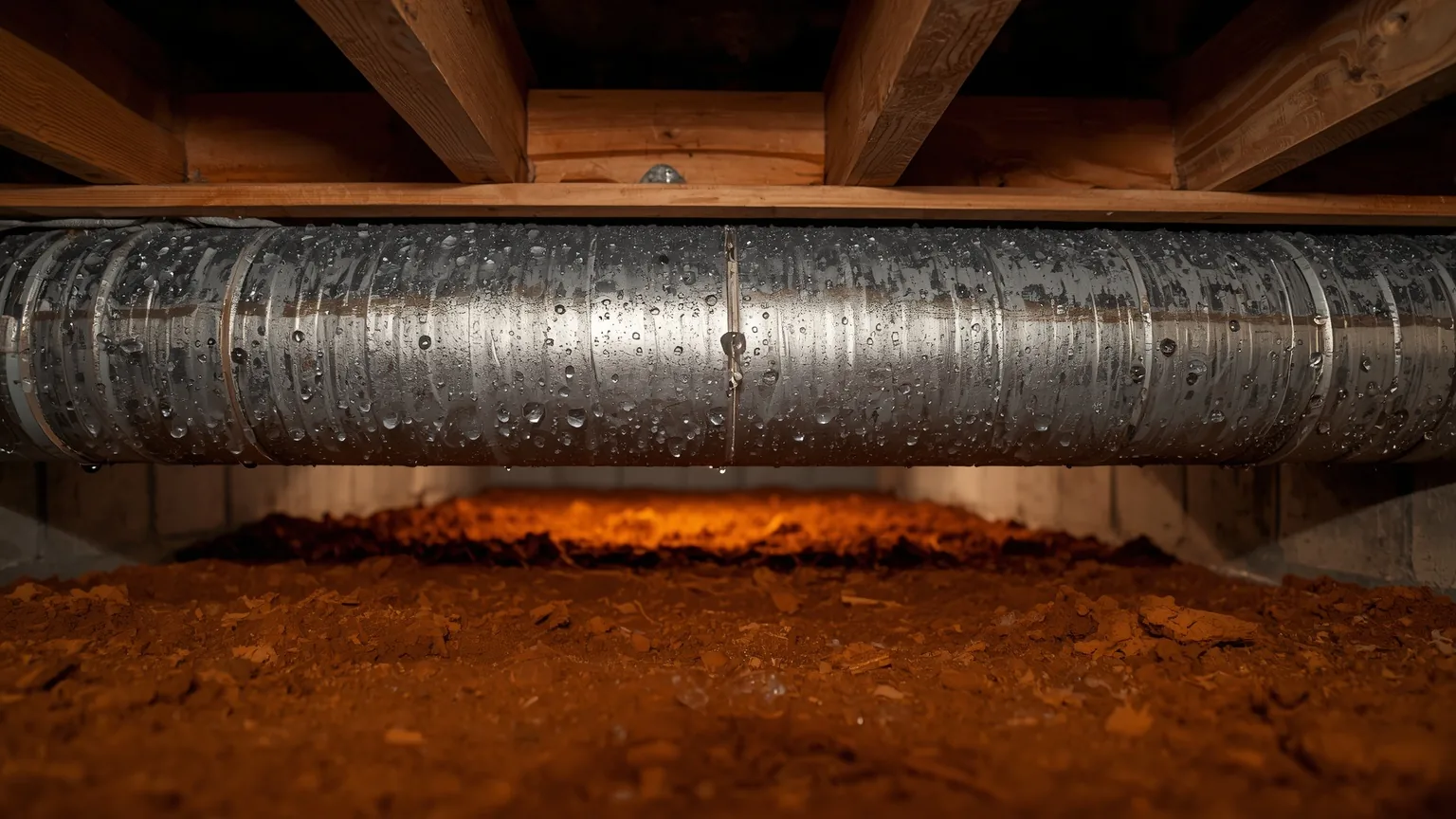
Crawl Space Moisture Control
Identifying the source before choosing the remedy.
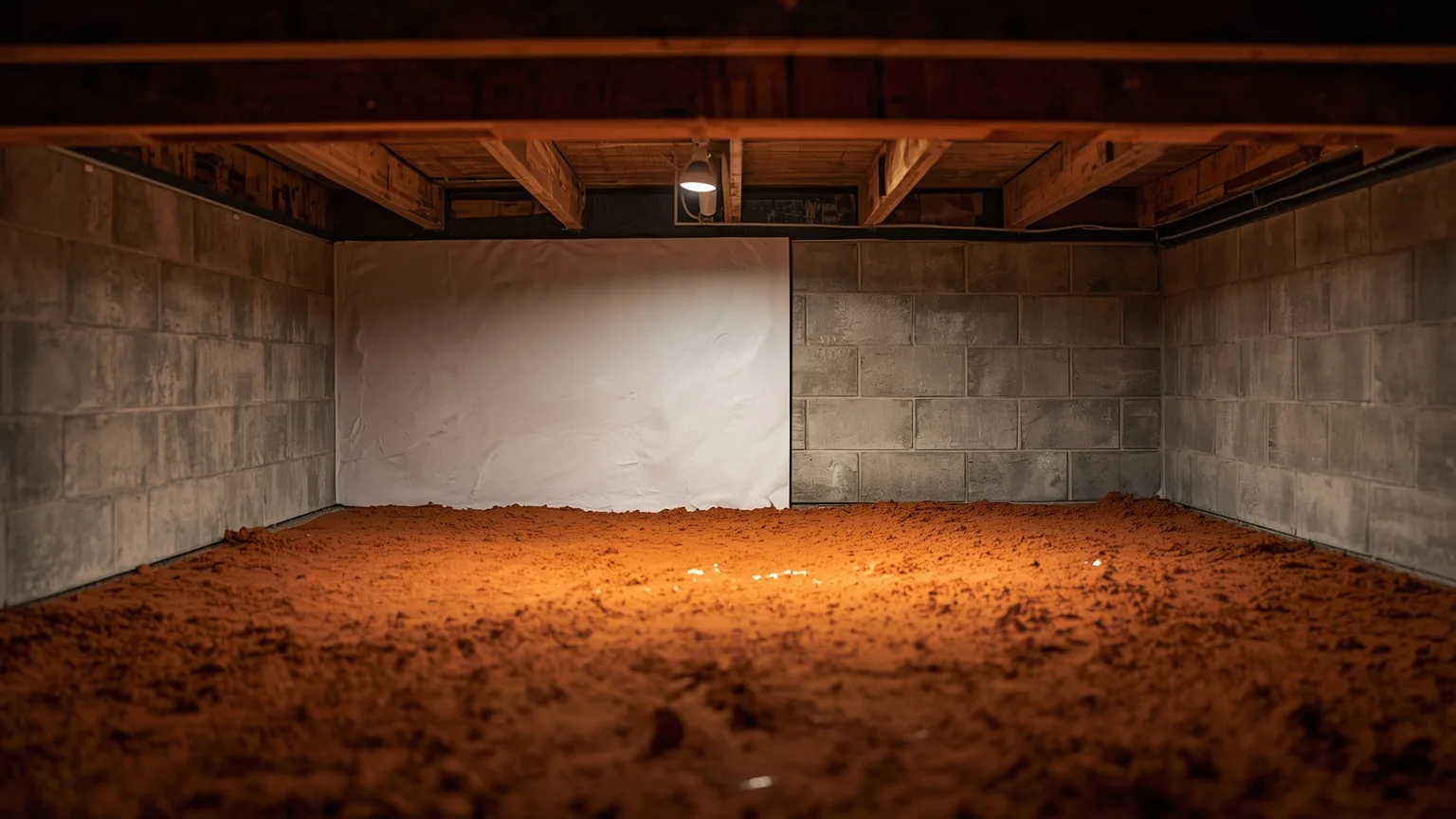
Crawl Space Encapsulation
The full sealed system — liner, closed vents and managed humidity.
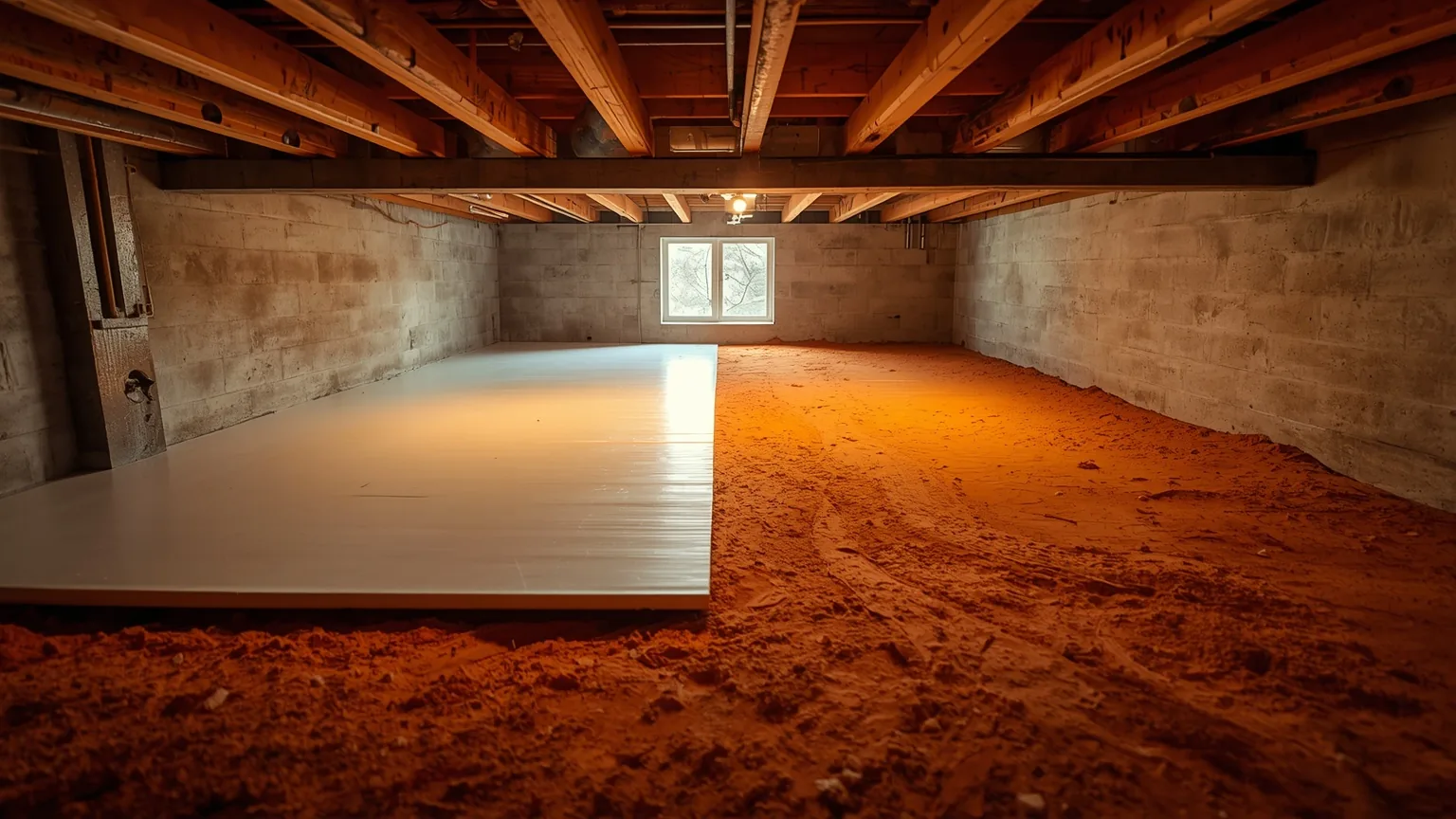
Crawl Space Encapsulation Cost
The variables behind the spread — and why one number cannot be honest.
Vapor Barrier Installation
Ground cover that stops soil moisture — and what it does to code.
Find out what is actually causing it.
An inspection underneath, readings taken on site, and a written scope ahead of any figure.