
Crawl Space Drainage in Atlanta, GA
Drainage gives water a route out. On Atlanta's sloping, well-drained ground the cheaper question comes first: did the water need to arrive at the foundation at all?
Who handles crawl space drainage in Atlanta, GA?
Atlanta Crawl Space Solutions arranges crawl space drainage across Atlanta and the metro counties. Drainage collects liquid water and routes it away. Exterior causes — roof discharge, grading and slope — get ruled out first, because on Piedmont terrain they account for a large share of wet crawl spaces and cost far less to correct than excavation under an occupied house. Call (404) 974-4979 to arrange an evaluation.
The exterior gets checked first — and here it often ends there
Roof discharge at the foundation, grading that falls toward the house, and hard surfaces pitched inward are common, cheap to correct, and on metro Atlanta's slopes they are responsible for a large share of wet crawl spaces.
An evaluation that proposes interior excavation without anyone having walked the outside has skipped the step most likely to solve the problem here. It is entirely fair to ask what was found out there and to expect a specific answer about grade, downspout terminations and where water arrives from.
When is interior drainage genuinely warranted?
Where water arrives through the ground rather than across it, and where exterior corrections have not resolved it. The timing is the evidence: water appearing a day or more after rain, or with no recent storm, is the pattern that points inside.
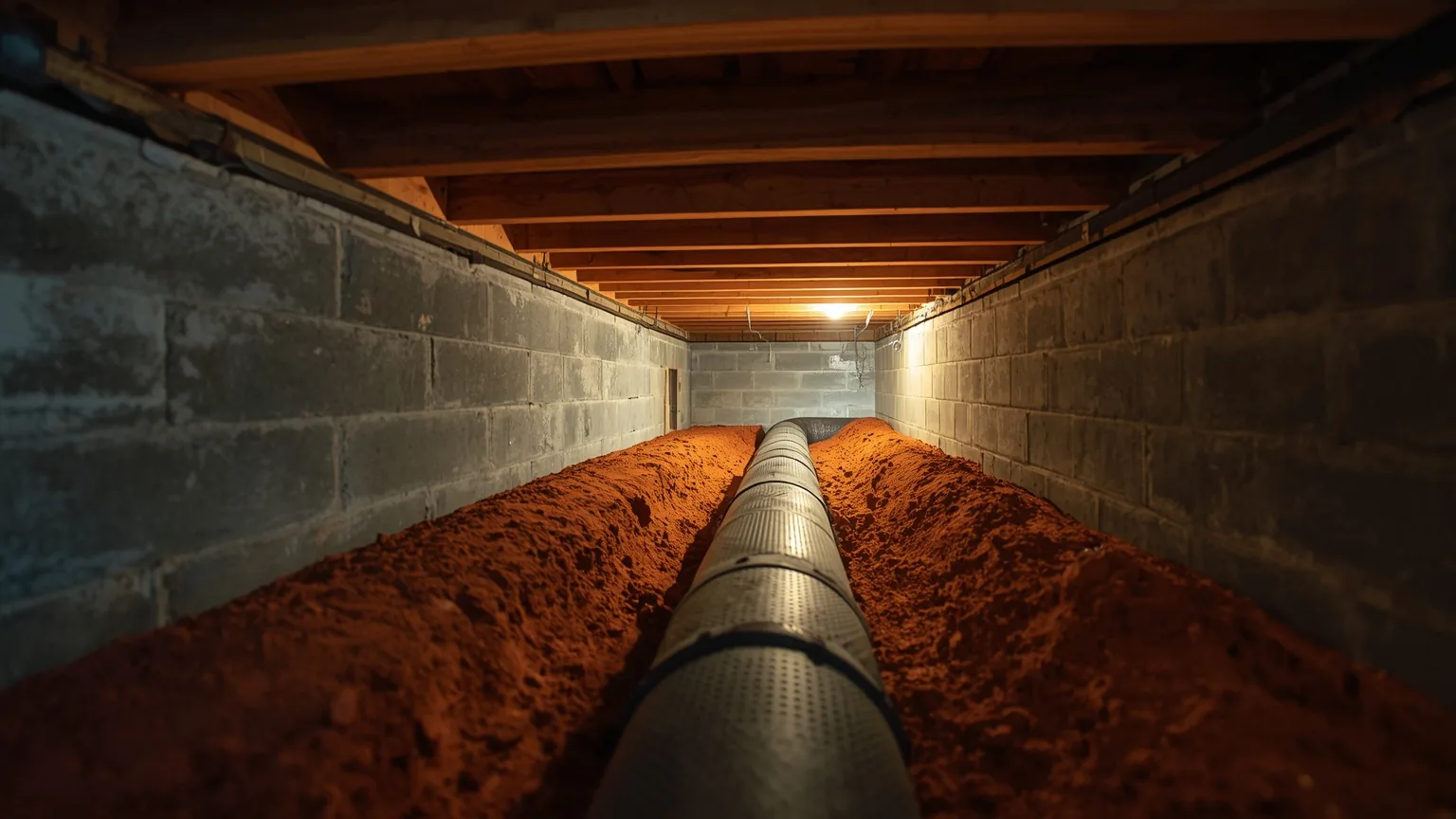
Where that is demonstrated, the work is a channel cut around the perimeter of the crawl space floor, bedded in washed stone and carrying a perforated pipe to a collection point, from which a sump pump lifts it clear of the foundation.
This is excavation under an occupied structure, close to footings and often close to services. It is not homeowner work, and this page deliberately does not describe how to do it. What you should expect is a clear account of where the channel runs, where it collects, where the discharge goes and what happens to the spoil.
Where drainage sits relative to everything else
Drainage handles liquid water. Waterproofing is the wider effort to stop water reaching the space at all, of which drainage is one part. Encapsulation handles vapor and does nothing about liquid water.
Water first, then any framing the water damaged, then sealing and humidity. Sealing over an unresolved water source is the most expensive sequence error available in this trade.
Well-drained ground on a slope is not the same as dry ground
The Piedmont soils under metro Atlanta drain well. That fact gets used to argue two opposite things, and only one of them is right.
The USDA describes the Gwinnett series, whose type location is in Newton County, Georgia, as well drained with moderate permeability, and the Cecil series as well drained with moderately high saturated hydraulic conductivity. Both carry a runoff class of medium to rapid. So the ground is not holding water against your foundation the way a heavy, slowly-permeable soil would.
But the same descriptions place Gwinnett soils on ridges with slopes commonly 6 to 30 percent, ranging up to 60. Well-drained ground on a slope sheds water rather than absorbing it, and 49.71 inches of annual rainfall has to go somewhere. What reaches an Atlanta crawl space is usually water that travelled across the surface and found a foundation in its path — which is why the fix is more often regrading and roof discharge than a trench, and why an interior drainage proposal here should be justified by the timing of when water actually appears.
Crawl Space Drainage questions
Do I need interior drainage or just better grading?
On most metro Atlanta lots, grading and roof discharge come first and often finish the job. Water appearing within an hour or two of rain and receding soon after is surface runoff. Water arriving a day or more later, or with no recent storm, is the pattern that justifies interior drainage.
Does every wet crawl space need a drainage system?
No. Drainage addresses liquid water. A crawl space that is humid but never takes on water has a vapor or air problem, and a drainage system would not change it. Installing one there is money spent on the wrong mechanism.
Why does water reach my foundation if the soil drains well?
Because the issue is volume and slope rather than absorption. The USDA describes the dominant Piedmont soils as well drained with medium to rapid runoff, on ridges with slopes commonly 6 to 30 percent. Water moves across that ground quickly and collects wherever something interrupts it — often a foundation.
Can I do the exterior work myself?
Extending downspouts and improving the fall of the ground away from the house is reasonable homeowner work and is often the highest-value thing you can do in this market. Interior drainage is excavation under an occupied structure near footings and services, and is not.
Where should collected water discharge to?
Far enough downslope that it does not return, onto ground that carries it away, and not onto a neighboring property. On sloping lots this is a genuine design question and belongs in the written scope rather than being improvised on the day.
Related crawl space services
Crawl Space Sump Pumps
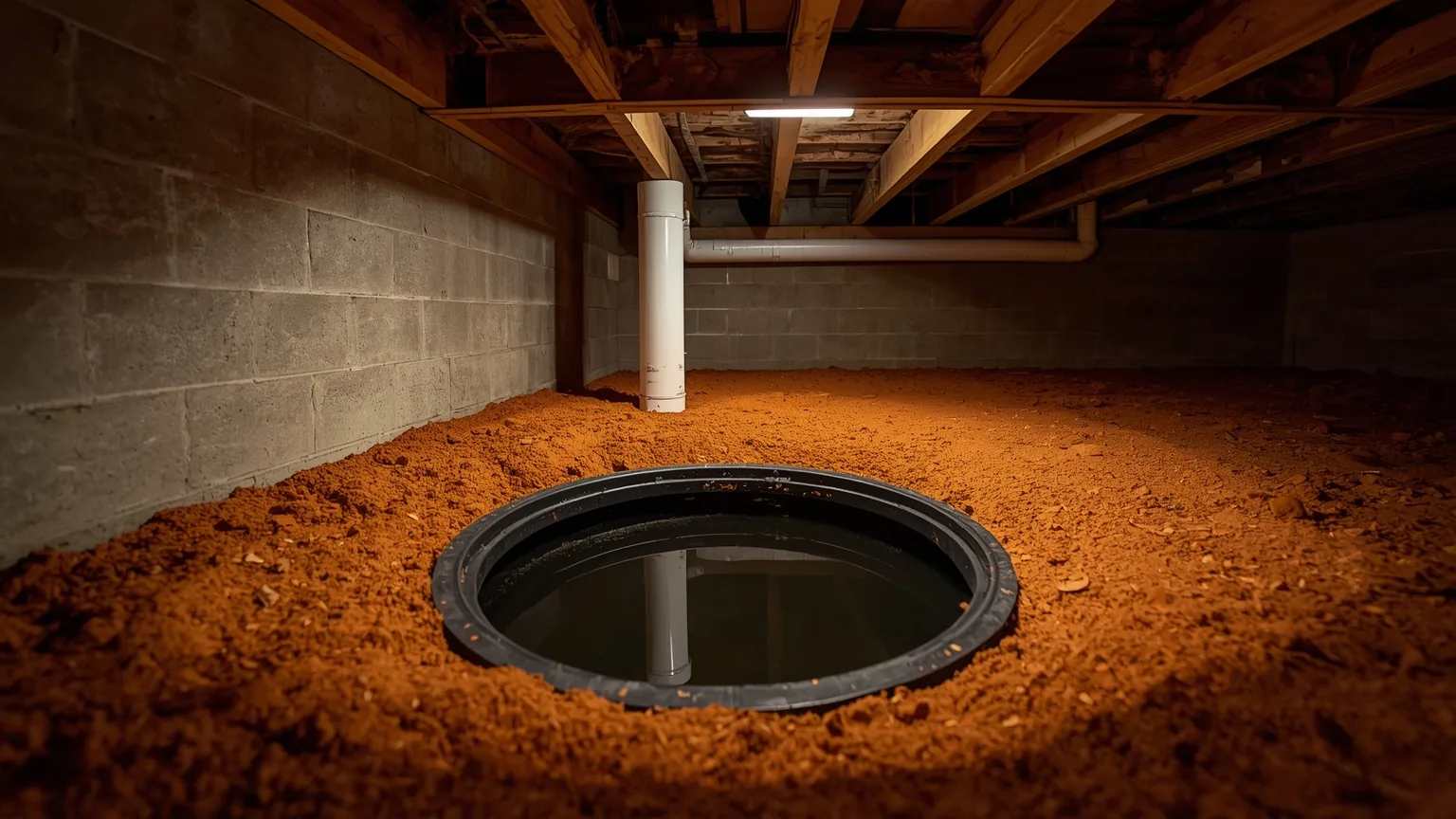
Basin, pump and discharge — and where the water actually goes.
Crawl Space Waterproofing
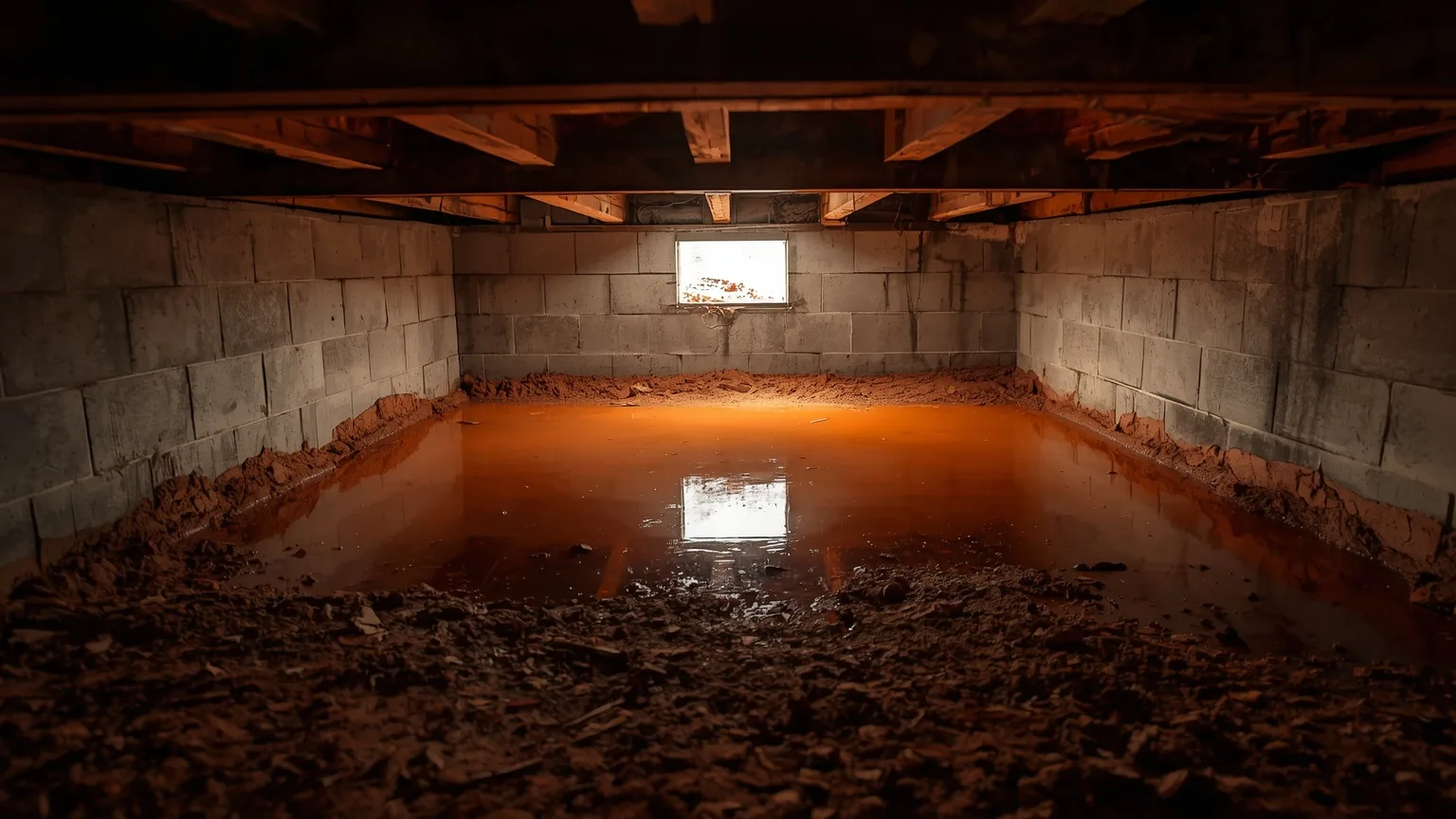
Stopping liquid water from arriving — outside causes first.
Crawl Space Encapsulation
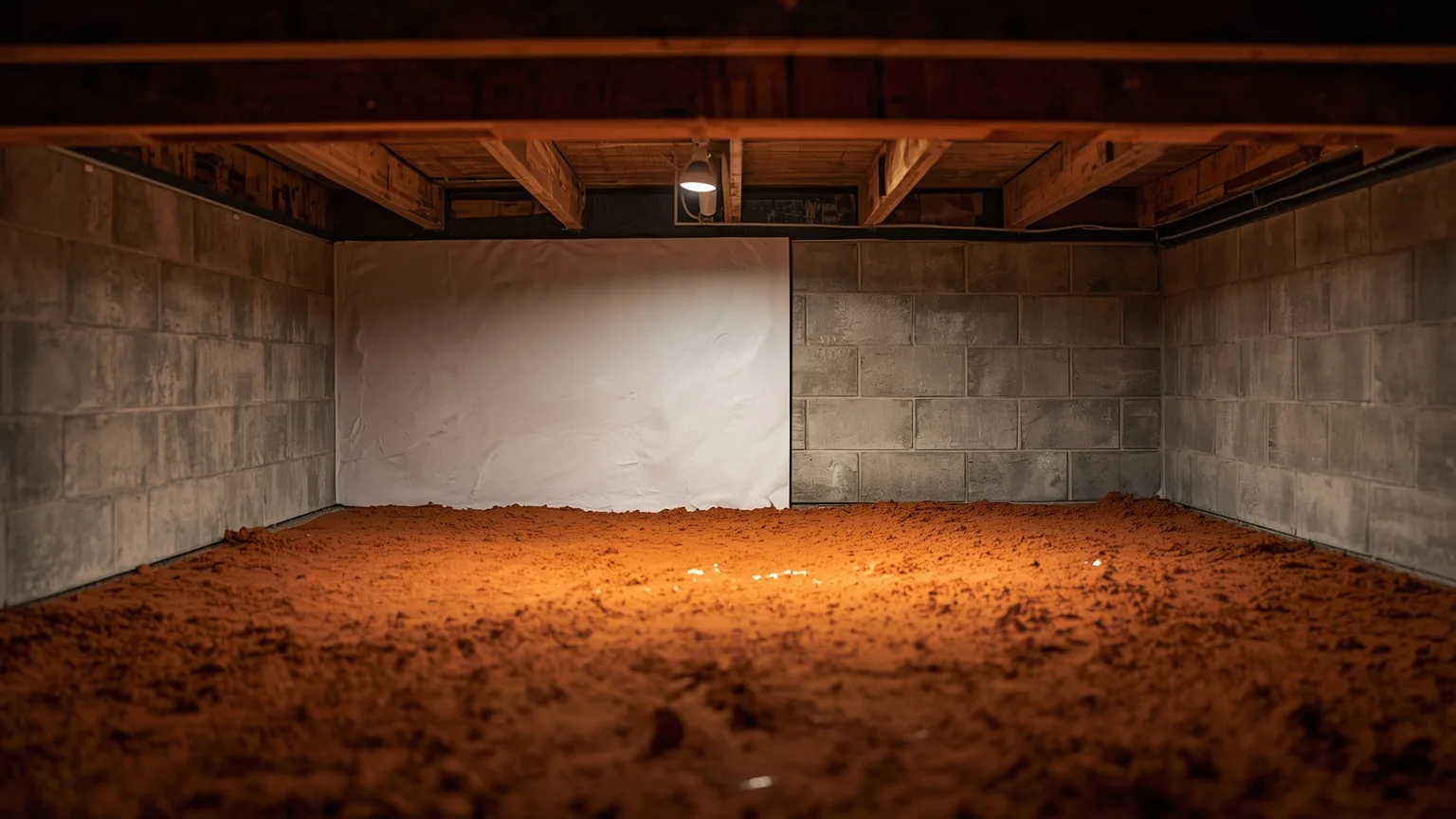
The full sealed system — liner, closed vents and managed humidity.
Crawl Space Moisture Control
Identifying the source before choosing the remedy.
Find out what is actually causing it.
An inspection underneath, readings taken on site, and a written scope ahead of any figure.